
Why Are Stone Slabs Uneven After Block Cutting?
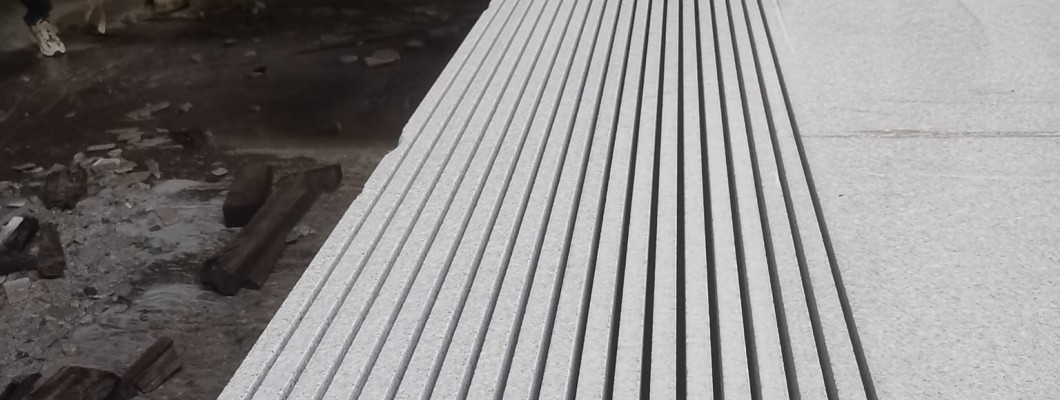
Uneven stone slabs are a common problem in granite and marble processing. The slabs may have inconsistent thickness, wavy surfaces, saw marks or deviations from the required dimensions. These problems affect polishing quality, increase material waste and raise production costs.
When this problem occurs on a multi-blade block cutting machine, operators should not immediately assume that the machine itself is defective. Uneven slabs may be caused by saw blade wobble, spindle problems, incorrect spacers, guide rail wear, unstable block fixing, unsuitable feeding speed or insufficient cooling water.
Common Signs of Uneven Stone Cutting
Before troubleshooting, check the type of cutting problem:
- The slab is thicker at one end and thinner at the other.
- The thickness varies from the top to the bottom of the slab.
- The slab surface has visible waves or deep saw marks.
- Different slabs from the same block have inconsistent thickness.
- The saw blade produces excessive vibration or abnormal noise.
- The cutting kerf gradually moves away from the correct position.
Different symptoms may have different causes, so each part of the cutting system should be inspected systematically.
1. Check the Saw Blades for Wobble
Saw blade wobble is one of the most common causes of uneven slabs. If a blade is bent, incorrectly tensioned or installed improperly, it may move from side to side during cutting.
Check the following points:
- Whether the saw blade body is flat.
- Whether the blade has been correctly tensioned.
- Whether the diamond segments are worn unevenly.
- Whether the blade flange is clean and correctly installed.
- Whether any blade has been damaged by excessive cutting pressure.
A dial indicator can be used to measure the radial and axial runout of each blade. A blade with excessive runout should be repaired, re-tensioned or replaced before production continues.
2. Inspect the Main Spindle
The spindle supports the complete saw blade assembly. Bearing wear, an unbalanced spindle or excessive spindle runout can cause all blades to vibrate during cutting.
Operators should inspect:
- Spindle bearing clearance and condition.
- Abnormal noise or heat around the bearing housing.
- Axial and radial spindle runout.
- The condition and alignment of the blade flanges.
- Whether the spindle assembly is properly lubricated.
If several slabs show similar waves or thickness deviations, the spindle should be checked carefully. Replacing only the saw blades may not solve the problem when the actual cause is spindle wear or misalignment.
3. Check the Blade Spacers
On a multi-blade block cutting machine, spacers determine the distance between the saw blades and therefore directly affect slab thickness. Incorrect, dirty or damaged spacers can produce slabs with inconsistent dimensions.
Make sure that:
- Every spacer has the correct thickness.
- The two surfaces of each spacer are flat and clean.
- No stone powder, rust or metal particles remain between components.
- Worn, deformed or damaged spacers are replaced.
- The complete blade assembly is tightened evenly.
Before installation, measure the spacers with accurate measuring tools. Even a small accumulated error can become significant when many saw blades are installed on the same spindle.
4. Inspect the Guide Rails and Machine Movement
Worn, dirty or poorly aligned guide rails can cause unstable movement of the cutting unit. This instability may result in tapered slabs, wavy surfaces or irregular saw marks.
Inspect the following:
- Whether the guide rails are clean and sufficiently lubricated.
- Whether there is excessive clearance in the moving components.
- Whether the bridge moves smoothly without shaking.
- Whether both sides of the machine move synchronously.
- Whether the guide rails are level, straight and parallel.
Stone dust and slurry should be removed regularly. Long-term accumulation may accelerate wear and reduce the movement accuracy of the machine.
5. Make Sure the Stone Block Is Fixed Securely
A heavy stone block may still move slightly if its bottom is uneven or if it is not properly secured. Even small movement during cutting can affect slab thickness and surface quality.
Before starting the machine:
- Place the block on a stable and level foundation.
- Check whether the bottom of the block has sufficient support.
- Use wedges, cement or suitable fixing methods where necessary.
- Confirm that the block cannot shift during the cutting cycle.
- Avoid placing the block on loose stone fragments or uneven supports.
For irregular blocks, extra attention should be given to the support points. The block should remain stable throughout the complete cutting process.
6. Adjust the Feeding Speed
Excessive feeding speed increases cutting resistance and can force the saw blades to bend or deviate. This is especially likely when cutting hard granite, using a large number of blades or working with worn diamond segments.
The feeding speed should be selected according to the stone hardness, block size, blade diameter, number of blades, segment condition and main motor power.
If uneven slabs appear, reduce the feeding speed and observe whether the cutting condition improves. However, extremely slow feeding is not always ideal because it may also affect segment performance and production efficiency. The goal is stable cutting rather than simply using the lowest possible speed.
7. Check the Cooling Water Supply
Cooling water removes heat and stone slurry from the cutting area. If the water supply is insufficient or uneven, the blades may overheat and lose stability.
Check whether:
- Every saw blade receives enough cooling water.
- The water nozzles are correctly positioned.
- No nozzle or pipe is blocked by stone slurry.
- The water pump provides stable pressure and flow.
- The recycled water system is properly filtered and cleaned.
The water should reach both sides of the cutting area. Uneven water distribution between blades can result in different temperatures and cutting conditions across the complete blade group.
A Practical Troubleshooting Order
To reduce downtime, operators can inspect the machine in the following order:
- Measure the thickness variation and identify the cutting pattern.
- Check whether the stone block is stable.
- Inspect the cooling water flow and nozzle positions.
- Reduce the feeding speed for a test cut.
- Measure saw blade wobble and inspect segment wear.
- Clean and measure all blade spacers.
- Check spindle runout, bearings and blade flanges.
- Inspect the guide rails, transmission system and bridge movement.
This sequence starts with the easiest operating checks before moving to components that require more time or technical inspection.
How to Prevent Uneven Stone Slabs
- Inspect the saw blades before every production cycle.
- Use blades and segments suitable for the stone material.
- Keep the spindle, flanges and spacers clean.
- Measure spacer thickness regularly.
- Clean and lubricate the guide rails according to schedule.
- Secure every stone block before cutting.
- Set a suitable feeding speed for each stone type.
- Maintain sufficient and evenly distributed cooling water.
- Record slab thickness and machine settings for each production batch.
Regular maintenance and accurate operating records make it easier to detect small changes before they become serious quality problems.
Conclusion
Uneven slabs after block cutting are usually related to one or more factors: saw blade wobble, spindle condition, spacer accuracy, guide rail alignment, block stability, feeding speed and cooling water.
A systematic inspection can help the factory find the real cause, reduce material waste and restore stable slab quality. If your factory is selecting or troubleshooting a multi-blade block cutting machine, Shuinan Machinery can provide machine configuration and technical support according to your stone material and production requirements.
Contact Shuinan Machinery
Shuinan Machinery has specialized in stone processing machinery since 1997. Contact us for more information about multi-blade block cutting machines and stone production solutions.
Website: https://shuinanmachinery.com/
Email: [email protected]
WhatsApp: +86 19805955837


Leave a Comment