Hidden Costs to Consider When Buying Stone Machinery
When purchasing stone machinery, many buyers focus mainly on the quoted machine price. However, the equipment price is only one part of the total investment required to put a machine into production.
Shipping, import taxes, factory preparation, installation, cutting tools, utilities and future maintenance can all affect the final cost. If these expenses are not considered in advance, the actual project budget may be higher than expected.
Before buying a stone cutting machine, polishing machine or quarry machine, customers should calculate the complete cost from ordering the equipment to starting normal production.
1. International Shipping Costs
International shipping is usually one of the largest additional expenses when importing stone machinery. The cost depends on the machine dimensions, total weight, container type, destination port and current freight rates.
Some machines can be loaded into a standard container, while larger equipment may require a 40-foot high-cube container, open-top container or special transportation arrangement.
Buyers should confirm whether the quotation is based on EXW, FOB, CFR or CIF terms. For example, an FOB price generally covers delivery and export handling up to the agreed Chinese port, but it does not include international freight, destination charges or import taxes.
Before placing an order, confirm:
- The required container type and quantity
- The estimated ocean freight
- Whether marine insurance is included
- Port handling charges at the destination
- Transportation from the destination port to the factory
2. Import Duties, Taxes and Customs Clearance
Import duties and taxes vary by country and by the customs classification of the equipment. In addition to import duty, some countries may charge value-added tax, customs clearance fees, inspection fees or documentation charges.
These expenses are normally not included in an FOB machine quotation. Customers should consult a local customs broker before ordering to confirm the applicable HS code, tax rate and import requirements.
Calculating these costs in advance can prevent unexpected payments when the machine arrives at the destination port.
3. Inland Transportation and Machine Unloading
After customs clearance, the machinery must still be transported from the port to the customer's factory. Heavy stone equipment may require a suitable truck, trailer or special transport permit.
The factory must also prepare the correct unloading equipment. Depending on the weight and structure of the machine, a crane or heavy-duty forklift may be required.
Buyers should check the access road, factory entrance and unloading area before the equipment arrives. Narrow roads, low gates or insufficient unloading space may increase transportation and handling costs.
4. Machine Foundation and Factory Preparation
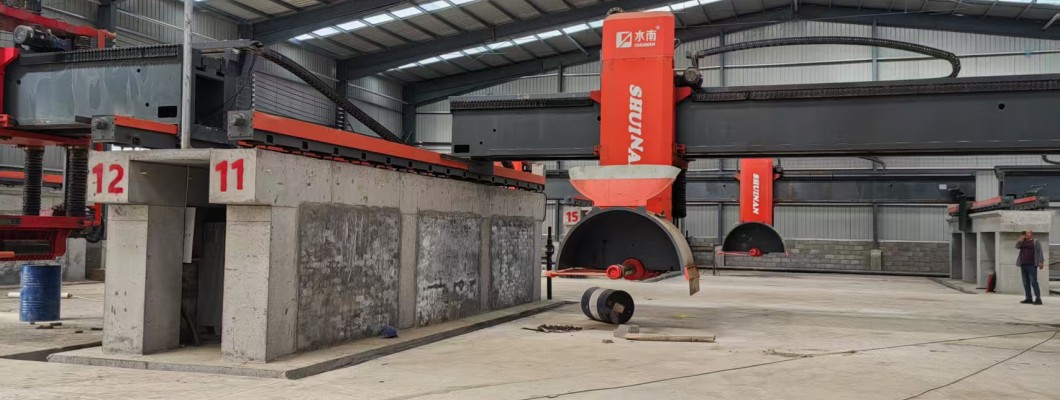
Many stone machines require a strong and level foundation. The foundation helps support the equipment, maintain alignment and reduce vibration during operation.
Factory preparation may include:
- Concrete foundations or machine bases
- Foundation bolts and embedded parts
- Drainage channels and water collection systems
- Space for loading stone blocks and unloading finished slabs
- Electrical cables and control connections
- Water pipes, pumps and cooling systems
- Suitable access for cranes and forklifts
Foundation drawings and machine dimensions should be confirmed before the machine arrives. Preparing the factory early can reduce installation delays and additional labor costs.
5. Electrical and Water Supply
Stone machinery usually requires an industrial power supply and a stable cooling water system. Buyers should confirm the local voltage, frequency and electrical standard before production begins.
Additional expenses may include electrical cables, transformers, circuit breakers, distribution cabinets and professional electrician services. If the local power supply does not match the machine configuration, electrical modifications may be necessary.
Stone cutting and polishing machines also consume a significant amount of water. Many factories install water recycling and filtration systems to reduce water consumption and remove stone slurry.
6. Installation and Technician Expenses
Large stone machinery usually requires professional installation, alignment and testing. Even when installation guidance is included, customers may still need to pay for local labor, lifting equipment, accommodation, transportation or other technician-related expenses.
Before ordering, ask the supplier what installation support is available and which costs are included.
Customers should confirm:
- Whether remote installation guidance is available
- Whether an engineer can travel to the customer's factory
- Who pays for flights, accommodation and local transportation
- How many days installation normally requires
- Which tools, lubricants and lifting equipment must be prepared locally
7. Saw Blades, Grinding Tools and Other Consumables
The machine itself may not include all the cutting or polishing tools needed for long-term production. Diamond saw blades, segments, grinding abrasives, polishing heads and other consumables should be included in the initial investment calculation.
The correct tools depend on the stone material. Granite, marble, limestone and sandstone have different hardness and cutting characteristics, so the blade or abrasive specification must match the material.
Low-quality tools may have a lower purchase price, but they can reduce cutting speed, affect slab quality and increase replacement frequency. Tool quality should therefore be evaluated together with its operating cost.
8. Spare Parts and Regular Maintenance
Every industrial machine requires regular inspection and maintenance. Bearings, seals, electrical components, belts, lubrication parts and other components may eventually need replacement.
Buyers should ask the supplier for a recommended spare parts list. Keeping important spare parts in the factory can reduce production downtime, especially when international delivery takes several weeks.
Regular maintenance also requires lubricating oil, grease, cleaning materials and trained workers. These costs may be small individually, but they should still be included in the long-term operating budget.
9. Operator Training and Production Adjustment
A properly selected machine may still produce poor results if it is operated incorrectly. Operators need to understand feeding speed, cutting depth, cooling water, blade condition and routine maintenance.
During the initial production period, the factory may use additional stone, tools and working time to adjust the machine settings. This testing and training period should be considered when planning the production schedule.
Good operator training helps reduce blade damage, uneven slabs, unnecessary power consumption and machine downtime.
10. Energy Consumption and Daily Operating Costs
The purchase price is a one-time investment, while electricity, water, labor and consumables are continuous operating expenses.
A machine with a larger motor or higher production capacity may consume more electricity, but it may also process more stone during the same period. Therefore, customers should compare the cost per square meter of finished stone rather than considering motor power alone.
Daily operating costs may include:
- Electricity consumption
- Cooling and recycled water
- Diamond tools and abrasives
- Machine operators and other labor
- Lubrication and maintenance materials
- Waste slurry treatment
11. Production Downtime and After-Sales Support
A low-priced machine may become expensive if it frequently stops working or if spare parts and technical support are difficult to obtain.
Production downtime can delay customer orders, increase labor costs and reduce factory output. Before choosing a supplier, customers should evaluate the machine structure, component quality, warranty terms, spare parts supply and response time for technical support.
Reliable after-sales service is part of the total value of the machine, even though it may not appear as a separate item in the original quotation.
How to Calculate the Total Investment
A more accurate purchasing budget can be calculated using the following structure:
Total investment = Machine price + Shipping + Import costs + Inland transport + Factory preparation + Installation + Tools + Initial spare parts
Long-term operating costs should then be calculated separately:
Operating cost = Electricity + Water + Labor + Consumables + Maintenance + Downtime
Comparing both the initial investment and the long-term operating cost will help customers select machinery that provides better overall value.
Information to Confirm Before Ordering
Before purchasing stone machinery, provide the supplier with accurate production information, including:
- The type of stone to be processed
- The dimensions of the blocks or slabs
- The required cutting or polishing capacity
- The required finished product dimensions
- The local industrial voltage and frequency
- The destination port and final factory location
- The available factory space and lifting equipment
With this information, the supplier can recommend a suitable machine, container plan and factory preparation solution.
Conclusion
When buying stone machinery, the lowest quotation does not always represent the lowest total cost. Shipping, taxes, installation, factory preparation, tools, maintenance and operating expenses can significantly affect the final investment.
A complete cost calculation allows the customer to prepare a realistic budget, avoid delays and choose equipment that matches the factory's long-term production requirements.
About Shuinan Machinery
Founded in 1997, Shuinan Machinery manufactures stone processing equipment, including multi-blade block cutting machines, bridge cutting machines, automatic polishing machines and quarry machines.
Tell us your stone material, processing dimensions, target capacity, local voltage and destination port. Our team can recommend a suitable machine configuration and help you estimate the complete project requirements.
Website: https://shuinanmachinery.com/
Email: [email protected]
WhatsApp: +86 19805955837
Leave a Comment