
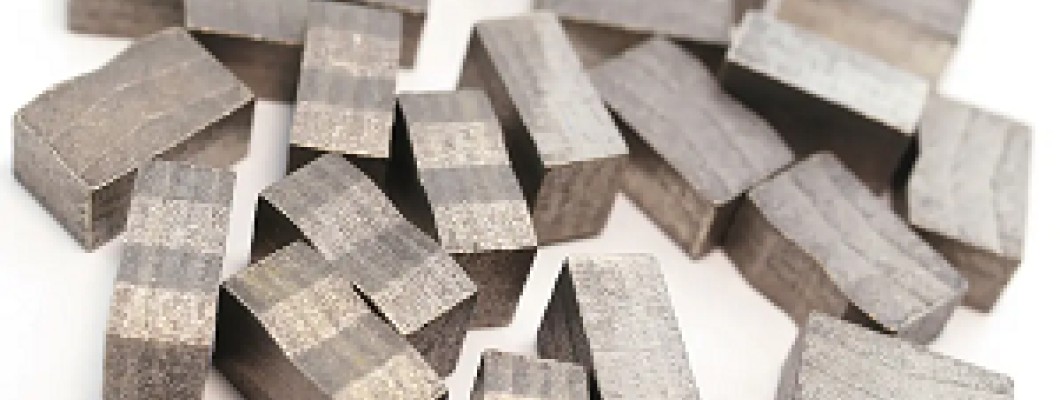
How Long Do Diamond Segments Last When Cutting Different Types of Stone?
Today, I would like to talk about a question that almost every stone factory owner asks: how long can diamond segments last?
It sounds like a simple question, but there is no single answer. Two factories may use the same saw blade diameter and cut blocks of a similar size, yet their segment life can be very different. Even when both materials are called granite or marble, differences in mineral composition, abrasiveness, cutting parameters, cooling water and machine condition can change the result.
Therefore, segment life should not be judged by stone hardness alone. In this article, we will look at the main factors from several practical angles and explain how a stone factory can reduce unnecessary tool wear without sacrificing production efficiency.
1. Stone Hardness Is Important, but It Is Only the Beginning
The hardness of a stone affects how difficult it is for the diamond particles to penetrate and remove material. In general, marble is easier to cut than granite because marble is mainly composed of relatively soft carbonate minerals, while granite normally contains harder minerals such as quartz and feldspar.
However, a harder stone does not always mean that the segment will simply wear faster. The relationship between the stone and the metal bond of the segment is more important:
- When cutting hard stone, the segment bond usually needs to release worn diamond particles at the correct rate so that new, sharp diamonds can be exposed.
- When cutting softer but highly abrasive stone, the bond may wear away too quickly, causing useful diamond particles to be lost before they are fully consumed.
This is why a segment designed for one type of granite may perform poorly on another material. Choosing a segment only according to the general name of the stone is often not enough.
2. Granite, Marble, Quartzite and Sandstone Wear Segments Differently
| Stone Type | Typical Cutting Characteristics | Possible Effect on Segment Life | What to Watch |
|---|---|---|---|
| Marble | Generally softer and easier to cut | Often provides good cutting speed, but some marble can be abrasive or fractured | Edge chipping, cracks, uneven blocks and excessive feed speed |
| Granite | Harder and commonly rich in quartz and feldspar | Requires the correct diamond grade and bond to remain sharp | Glazing, slow cutting, high motor current and overheating |
| Quartzite | Very hard, dense and rich in quartz | Can create high cutting resistance and rapid diamond dulling if the segment is unsuitable | Reduced cutting speed, vibration, heat and polishing of the segment surface |
| Sandstone | May be relatively soft but highly abrasive | Can wear the metal bond and segment height quickly | Fast segment loss, side wear and reduced blade clearance |
| Limestone | Usually softer, but density and silica content vary | Life may be good with the correct bond, but siliceous varieties can behave differently | Material variation between quarry layers |
This table gives a general direction, not a fixed rule. The exact quarry, mineral composition and block condition must still be considered. A sample-cutting test and accurate production records are much more useful than relying only on the commercial stone name.
3. Abrasiveness Can Matter More Than Hardness
Hardness describes resistance to scratching, while abrasiveness describes how aggressively a material wears the cutting tool. These two properties are related, but they are not the same.
For example, sandstone may be easier to penetrate than dense granite, but loose and sharp silica particles can continuously grind the metal bond. As a result, the segment may lose height surprisingly fast. On the other hand, a very hard and dense stone may cause the segment surface to become smooth and dull instead of wearing normally.
Operators should identify which type of problem is occurring:
- Segment wears too fast: the bond may be too soft for the material, the stone may be highly abrasive, or the cutting parameters may be too aggressive.
- Segment cuts slowly but hardly wears: the bond may be too hard, the diamonds may not be exposed properly, or the segment may have become glazed.
- Uneven or one-sided wear: blade alignment, spindle condition, guide rail accuracy or water distribution may be the real cause.
4. The Segment Formula Must Match the Stone
A diamond segment is not simply a piece of metal with diamonds inside. Its performance depends on diamond concentration, diamond size, diamond strength and the formulation of the metal bond.
The bond has two jobs: it must hold the diamonds firmly during cutting, and it must wear at a controlled rate to expose fresh cutting points. If the bond is too soft, the segment is consumed too quickly. If it is too hard, worn diamonds remain trapped and the segment loses its cutting ability.
For this reason, a stone factory should tell the tool supplier the exact material being cut, blade diameter, number of blades, spindle speed, cutting depth, feed speed and machine power. Photos of the stone and used segments can also help the supplier adjust the formula.
5. Cutting Speed: Faster Is Not Always More Economical
Increasing feed speed may improve short-term output, but pushing the blade beyond a stable cutting range can increase motor load, vibration and segment temperature. It can also cause diamonds to fracture or pull out prematurely.
Cutting too slowly is not always better either. If the diamonds do not receive enough working pressure, the segment may rub against the stone instead of cutting it efficiently. This can polish the segment surface and create glazing.
The best operating point is a balance between output, motor load, cutting sound, slab quality and segment consumption. Operators should adjust the feed gradually and observe the machine rather than selecting one speed for every stone.
6. Cutting Depth and Blade Engagement Affect Wear
Deep cutting increases the contact area between the blade and the stone. This raises cutting resistance and requires sufficient motor power, blade rigidity and cooling water. If the machine or tool is not suitable for the selected cutting depth, the blade may deflect and the segment sides may rub against the stone.
For multi-blade block cutting machines, this becomes even more important. Adding more blades increases total cutting load. The operator should consider the stone type, blade diameter, number of blades, slab thickness and main motor power together. Simply installing the maximum possible number of blades does not guarantee the lowest cost per square meter.
7. Cooling Water Directly Influences Segment Life
Cooling water removes heat and carries stone slurry away from the cutting area. Insufficient water flow can lead to overheating, segment glazing, loss of cutting efficiency and, in severe cases, damage to the segment or blade core.
Factories should regularly check:
- Whether water reaches both sides of every blade
- Whether nozzles are blocked by slurry or mineral deposits
- Whether water pressure remains stable throughout the cut
- Whether recycled water contains too much sediment
- Whether the slurry can leave the cutting gap efficiently
More water is not the only goal. The water must be clean enough, correctly directed and evenly distributed across the blade set.
8. Machine Condition Can Be Mistaken for a Segment Problem
When segment life suddenly becomes shorter, many factories immediately change the diamond tool. But abnormal wear may come from the machine.
Possible mechanical causes include:
- Spindle runout or worn bearings
- Incorrect blade spacing or installation
- Loose blade flanges
- Uneven guide rails or inaccurate beam movement
- Unstable block fixing
- Machine vibration under load
- Uneven water supply between blades
A rigid and accurately aligned stone cutting machine helps every blade share the load more evenly. This improves slab consistency and prevents a small number of blades from wearing much faster than the others.
9. Block Quality and Internal Cracks Also Matter
Natural stone is never perfectly uniform. One block may contain hard mineral bands, soft veins, repaired areas, cavities or hidden cracks. These changes can create impact loads and unstable cutting resistance.
If the block is not placed securely, movement during cutting can pinch the blade or cause side friction. Before production, operators should inspect the block, select a stable cutting direction and make sure it is firmly supported.
10. How Should a Factory Measure Segment Life?
Using only the number of working days is not accurate because daily output, blade quantity and slab thickness may change. A better method is to record the actual cutting work.
For each blade set, record:
- Stone name and quarry source
- Blade diameter and number of blades
- Initial and remaining segment height
- Total square meters or cutting area completed
- Average feed speed and cutting depth
- Main motor current or load
- Slab thickness and surface quality
- Any unusual vibration, noise or blade deviation
The factory can then compare segment cost per square meter instead of comparing purchase price alone. A cheaper segment that wears rapidly or forces the machine to run slowly may create a higher total production cost.
11. Practical Ways to Extend Diamond Segment Life
- Identify the stone accurately. Do not rely only on the name “granite” or “marble.” Consider quartz content, density, grain size, abrasiveness and quarry source.
- Use a suitable segment formula. Match the diamond and bond characteristics to the material and machine.
- Start with conservative parameters. Increase feed speed gradually while monitoring motor load and cutting stability.
- Maintain stable cooling. Keep water nozzles clean and make sure every blade receives sufficient water.
- Check machine accuracy. Inspect the spindle, bearings, blade flanges, guide rails and blade alignment regularly.
- Secure the block correctly. Prevent movement and select a sensible cutting direction.
- Record production data. Compare cost per square meter, output and slab quality together.
- Inspect wear patterns. Uneven wear often reveals a mechanical or operating problem before a serious failure occurs.
Frequently Asked Questions
Do diamond segments always last longer when cutting marble?
Not always. Marble is generally softer than granite, but abrasive minerals, cracks, block movement, unsuitable segment bonds or incorrect cutting parameters can still cause rapid wear.
Why does a new segment cut slowly even though it does not wear much?
The segment bond may be too hard for the stone, or the diamond surface may not be opening correctly. In this condition, the segment can become glazed and rub against the stone instead of cutting efficiently.
Why do some blades in a multi-blade set wear faster than others?
Possible reasons include uneven water distribution, blade installation errors, spindle or flange problems, inaccurate spacing, blade deflection or an uneven load caused by the stone structure.
Should I choose the segment with the longest possible life?
Not necessarily. The best segment should provide a good balance of cutting speed, tool life, slab quality and stable machine load. The lowest cost per square meter is more meaningful than segment life alone.
Conclusion
Diamond segment life is the result of an entire cutting system. Stone hardness matters, but mineral composition, abrasiveness, segment formula, feed speed, cutting depth, cooling water, block condition and machine accuracy all work together.
When a factory evaluates these factors as a system, it becomes easier to find the real cause of abnormal wear, improve daily output and reduce cutting cost per square meter.
Shuinan Machinery has specialized in stone machinery manufacturing since 1997. We supply multi-blade block cutting machines, bridge saws, stone polishing machines and quarry equipment for different stone-processing requirements. If you are planning a new factory or improving an existing production line, please send us your stone type, block dimensions, required slab size and expected output. Our team will help you select a suitable machine configuration.
Contact Shuinan Machinery for more information:
Website: https://shuinanmachinery.com/
Email: [email protected]
WhatsApp: +86 198 0595 5837


Leave a Comment