How to Choose Saw Blade Diameter According to Stone Block Height
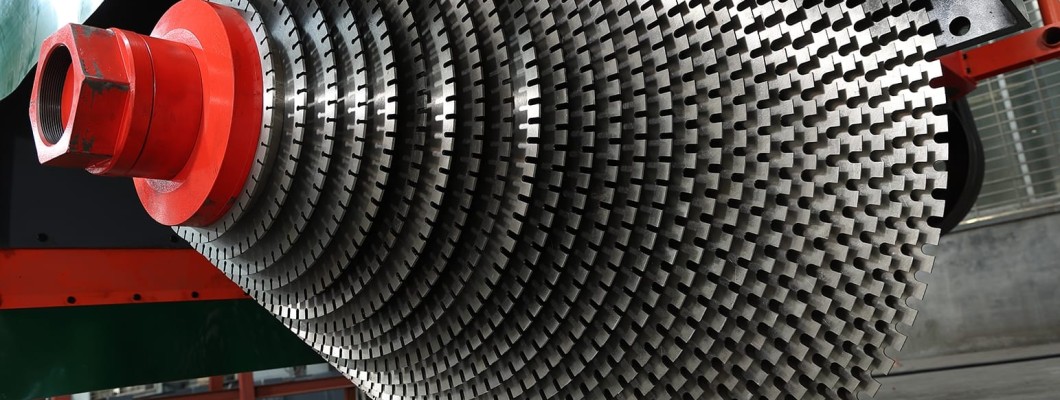
Today, I would like to explain how to choose the correct saw blade diameter according to the height of a stone block. This is one of the first questions that should be answered when selecting a multi-blade bridge block cutting machine.
If the blade is too small, it cannot reach the required cutting depth. If it is unnecessarily large, the factory may face a higher blade cost, greater power demand, increased spindle load and less efficient use of the machine. The correct blade diameter should match the actual block height, stone type, machine structure and production plan.
Cutting Depth Formula for a Multi-Blade Bridge Block Cutting Machine
For the multi-blade bridge block cutting machine discussed in this article, the maximum cutting depth can be estimated with the following formula:
Maximum cutting depth = (Saw blade diameter − 320 mm) ÷ 2
The 320 mm deduction represents the central area of the blade that cannot enter the stone because clearance must be reserved for the spindle, flanges and related machine structure. After deducting this area, the remaining diameter is divided by two to obtain the available radial cutting depth.
Important: This formula is intended only for the multi-blade bridge block cutting machine configuration described here. It should not be applied directly to single-blade bridge saws, mining machines, circular saws or machines with a different spindle and flange structure.
Example: Cutting Depth of a 2500 mm Saw Blade
If the machine is equipped with a saw blade measuring 2500 mm in diameter, the calculation is:
(2500 mm − 320 mm) ÷ 2 = 1090 mm
Therefore, a 2500 mm saw blade provides a calculated maximum cutting depth of 1090 mm. In normal product descriptions, this may be expressed as approximately 1100 mm.
However, when selecting a machine for a real factory, the block height should not exceed the confirmed working capacity. Installation level, block placement, blade wear and the required bottom clearance must also be considered.
Saw Blade Diameter and Calculated Cutting Depth Table
| Saw Blade Diameter | Calculation | Calculated Maximum Cutting Depth |
|---|---|---|
| 1600 mm | (1600 − 320) ÷ 2 | 640 mm |
| 1800 mm | (1800 − 320) ÷ 2 | 740 mm |
| 2000 mm | (2000 − 320) ÷ 2 | 840 mm |
| 2200 mm | (2200 − 320) ÷ 2 | 940 mm |
| 2500 mm | (2500 − 320) ÷ 2 | 1090 mm |
| 3000 mm | (3000 − 320) ÷ 2 | 1340 mm |
This table provides a quick theoretical reference. The final allowable blade diameter and cutting depth must still be confirmed against the selected machine model.
Reverse Formula: Calculate the Required Saw Blade Diameter
If the height of the stone block is already known, the formula can be rearranged to estimate the minimum blade diameter:
Required saw blade diameter = (Required cutting depth × 2) + 320 mm
For example, if a factory needs a cutting depth of 1000 mm:
(1000 mm × 2) + 320 mm = 2320 mm
The theoretical minimum diameter is 2320 mm. Since this is not usually a standard blade size, the factory should select the next suitable standard diameter supported by the machine, such as 2500 mm.
Do Not Select a Blade with No Safety Margin
A common mistake is choosing a blade whose calculated cutting depth is exactly equal to the tallest block. In practical production, some margin is useful because natural stone blocks are rarely perfectly flat or identical in height.
Additional allowance may be needed for:
- Variation in block height from one end to the other.
- An uneven or irregular upper surface.
- Block positioning and support material underneath the block.
- Blade wear after repeated cutting and segment consumption.
- Bottom clearance required to avoid contact with the trolley or support.
- Differences between theoretical depth and the confirmed working stroke.
For this reason, customers should provide the maximum block height rather than only the average height. Shuinan Machinery can then confirm the appropriate machine model and blade diameter.
Why Not Always Choose the Largest Saw Blade?
A larger blade provides greater cutting depth, but it is not automatically the most economical choice. Blade diameter affects several parts of the cutting system.
1. Blade and Segment Cost
Larger steel cores and longer segment circumferences normally cost more. If the factory mainly processes short blocks, purchasing oversized blades may increase the investment without improving usable output.
2. Main Motor Power
A larger blade creates higher cutting resistance and rotational inertia. The required motor power also depends on the number of blades, stone hardness, cutting speed and cutting depth. Blade diameter must therefore be matched with the complete machine configuration.
3. Spindle Load and Machine Structure
The spindle, bearings, beam and lifting system must be designed for the selected blade diameter and total blade weight. Installing a diameter beyond the machine specification can affect stability, accuracy and safety.
4. Cutting Accuracy
Large-diameter blades require correct tension, alignment and cooling. If the blade condition or machine adjustment is poor, deflection may lead to thickness variation, saw marks or increased segment wear.
5. Water Supply and Slurry Removal
As the cutting depth and number of blades increase, sufficient water must reach the cutting area. Cooling water removes heat and carries stone slurry away from the kerf. Inadequate water flow can reduce cutting efficiency and shorten segment life.
Stone Type Also Affects Blade Selection
Two factories cutting blocks of the same height may still require different operating configurations. Granite is generally harder and more abrasive than marble, although the exact behavior varies by stone variety and mineral composition.
When cutting hard granite, the manufacturer may recommend a lower feed speed, a suitable segment bond or fewer large blades for the available motor power. Marble may allow different blade quantities and cutting parameters. Therefore, block height determines the required cutting depth, but stone type helps determine whether the overall blade and power configuration is practical.
Blade Diameter Must Be Considered Together with Blade Quantity
On a multi-blade bridge block cutting machine, the total cutting load comes from all blades working at the same time. A machine carrying several 2500 mm blades has a very different load from a machine using only one blade of the same diameter.
Before confirming the configuration, consider:
- The diameter of the largest blades.
- The number of large and small blades installed.
- The required slab thickness and spacer arrangement.
- The main motor power.
- The hardness and abrasiveness of the stone.
- The expected feed speed and daily output.
For example, a standard 55 kW configuration and a heavy-duty 75 kW configuration may both use large-diameter blades, but the recommended blade quantity can be different. The final configuration should be based on the total working load rather than blade diameter alone.
Information to Send Your Machine Supplier
To receive an accurate recommendation, provide the following information:
- Maximum block length, width and height.
- Whether the material is granite, marble or another stone.
- Required finished slab thickness.
- Expected number of saw blades.
- Required daily production capacity.
- Available voltage, frequency and factory power supply.
- Whether block heights are consistent or vary significantly.
Photos or videos of the actual blocks are also helpful, especially when the blocks have irregular surfaces.
Frequently Asked Questions
What is the cutting depth of a 2500 mm saw blade?
For the multi-blade bridge block cutting machine covered in this article, the calculated depth is (2500 − 320) ÷ 2 = 1090 mm, commonly described as approximately 1100 mm.
Can this formula be used for every stone cutting machine?
No. It applies only to the relevant multi-blade bridge block cutting machine design. Other machines may have different spindle diameters, flange sizes, structures and working strokes.
Can a 2500 mm blade cut a block exactly 1100 mm high?
The calculated depth is 1090 mm, so the maximum block height and necessary operating clearance must be confirmed carefully. Do not rely only on the rounded figure of 1100 mm.
Should I choose the next larger standard blade size?
If the calculated minimum diameter is between standard blade sizes, the next suitable standard diameter is normally considered. It must also be supported by the machine structure, motor power and spindle specification.
Does a larger blade increase daily output?
Not necessarily. It increases cutting depth, but daily output also depends on blade quantity, slab thickness, feed speed, stone properties, cooling, loading time and machine configuration.
Conclusion
Stone block height is the starting point for selecting saw blade diameter. For the multi-blade bridge block cutting machine discussed here, use the formula:
Cutting depth = (Saw blade diameter − 320 mm) ÷ 2
A 2500 mm blade therefore provides a calculated cutting depth of 1090 mm. To work in reverse, use:
Required blade diameter = (Required cutting depth × 2) + 320 mm
The final decision should also account for block variation, blade quantity, stone type, motor power, machine structure and production requirements. Choosing the correct diameter helps the factory achieve sufficient depth without paying for an unnecessarily large cutting system.
About Shuinan Machinery
Founded in 1997, Shuinan Machinery is a professional manufacturer of stone mining and processing equipment in Shuitou, Fujian, China. Our products include multi-blade bridge block cutting machines, automatic slab polishing machines, bridge cutting machines, double-blade quarry machines and other stone-processing solutions.
Send us your maximum block dimensions, stone type, required slab thickness and production target. Our team will help you select a suitable machine model, saw blade diameter and blade configuration.
Website: https://shuinanmachinery.com/
Email: [email protected]
WhatsApp: +86 198 0595 5837
Related Products


Leave a Comment